The story
From a wrestling club in El Mahalla El Kubra to the largest sumo stages in the world, and a kitchen in Los Angeles.
He builds the door
when there isn't one
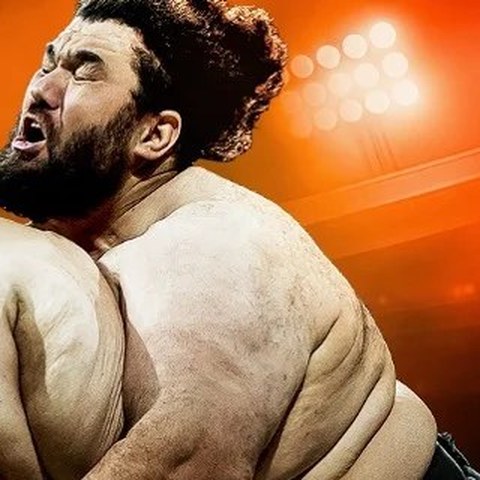
Ramy Elgazar came up in a sport his country barely funded, in a weight class nobody in the region competed at, from a textile town in the Nile Delta. There was no pathway in front of him, so he made one. He paid for his own flight to the United States in 2015, and three weeks after landing he took the heavyweight title at the US Sumo Open from a champion who had not lost there in eight years.
That is the whole method. He enters rooms where he is the only Egyptian and the only Arab, and he arrives prepared rather than hopeful. Ten national titles. Four US Sumo Open crowns. An international referee licence. Nearly nineteen hundred shows on five continents. A kitchen of his own.
He is also a father and the person his family relies on, and that is not incidental to the story. Every decision in this timeline was taken with that responsibility already on his shoulders. He has never accepted a ceiling on what he is allowed to be.
Athlete. Referee. Performer. Cook. Provider. Each one added without putting down the one before it.

Official standing
Governing body
- International Referee, International Sumo Federation
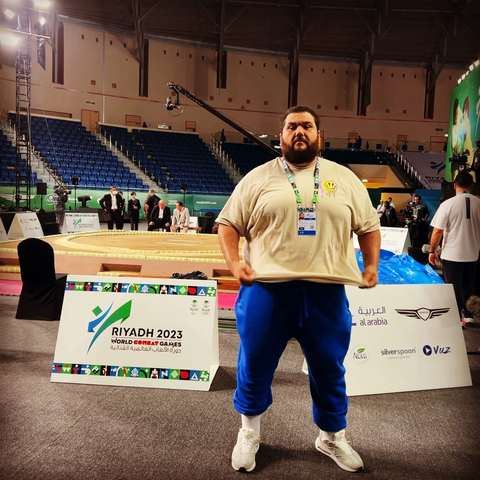
- Officiated the World Combat Games, Riyadh 2023
- Works with the federation on regional development
USA Sumo
- Board Member
- Assistant Coach
- Coach to the United States national sumo team
- Represented by Andrew Freund, founder of USA Sumo and director of All Star Sumo
Regional
- The only Arab wrestler at the first professional sumo event held in the UAE
- Building a development programme for sumo in the Gulf
- Produces Arabic language sumo education for a regional audience
- Close to one million followers across platforms
The road
El Mahalla El Kubra
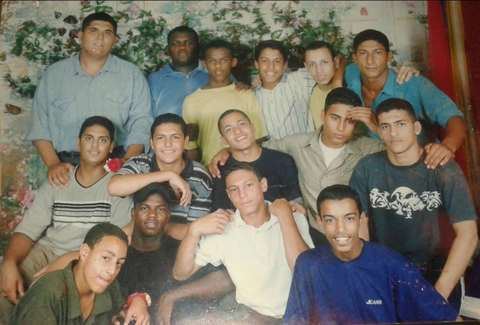
Starts Greco Roman wrestling at the Ghazl El Mahalla club at the age of seven, under Captain Abdel Hay El Qost, later head coach of the Saudi national team. His father is a maintenance technician at the Misr Spinning and Weaving Company and a former bodybuilder. The whole house is built around sport.
Judo, and two sports at once
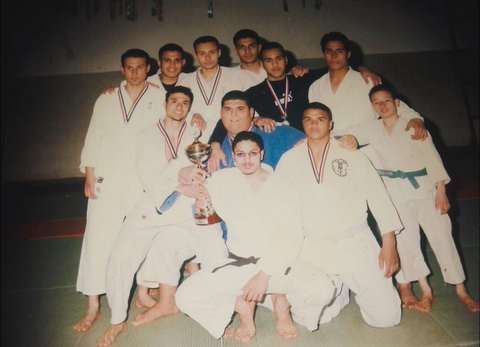
Takes up judo under Captain Metwally El Nafrawy. For two years he trains both disciplines in the same hall, wrestling from eight in the morning until noon, sleeping in the shade of the club, then judo from three until seven.
Egypt national judo team at fourteen
Competes at over 100 kg. Takes the Arab Championship and an African bronze before turning seventeen. He fights the Arab final with a broken rib.
The Sydney cycle
French expert Christophe Gagliano backs him for Olympic selection. He is not chosen. Egypt returns from Sydney without a judo medal. He leaves the sport soon afterwards.
Sumo finds him
Introduced to sumo by Captain Bakr El Sharnouby. He enters the Egyptian national championship at the first attempt and wins it, still a junior.
Away from the mat
Five years out of competition. He keeps training, works, and waits for a door to open in a sport his country barely funds.
International breakthrough
Joins Egypt's national sumo squad, then the strongest Arab team in the sport. He loses his first event in Poland by applying judo instinct, returns the same year and takes gold plus the Strongest Wrestler Cup. He stages the first public sumo event ever held in Egypt, at El Sawy Culturewheel in Cairo.

Gold in Budapest, loss in Taiwan
Takes gold in Hungary. At the World Championships in Taiwan his foot sinks into newly laid clay and he loses to Byamba of Mongolia. What the Mongolian says to him afterwards is the reason he goes to America.
America, and the title
He funds the trip himself out of savings, help from both parents and the sale of his motorcycle. He lands in New York on 17 July and works a nightclub door the same evening. Three weeks later he takes heavyweight gold and openweight silver at the US Sumo Open. A ninety minute American television documentary follows him through it. His following goes from five hundred to over one hundred thousand in days.
Turning professional
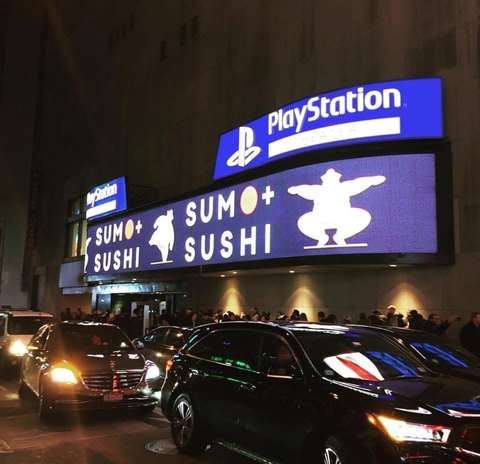
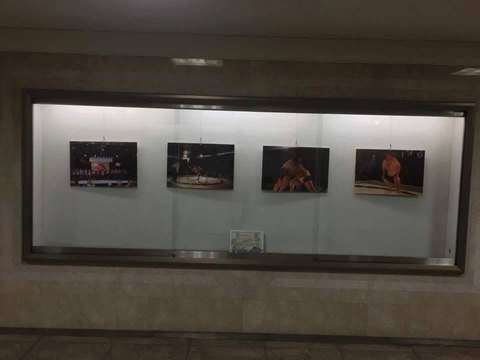
Signs with USA Sumo and moves to Los Angeles, where he has been based since. Bronze in 2016, a second gold in 2017. Begins the touring circuit, including Sumo and Sushi at the PlayStation Theater in New York in 2018. His photographs are exhibited in a Tokyo metro gallery under the title Egyptian Gallery in Tokyo.
Touring and filming
Openweight bronze at the US Sumo Open and a run of brand and creator work.
The heaviest collision
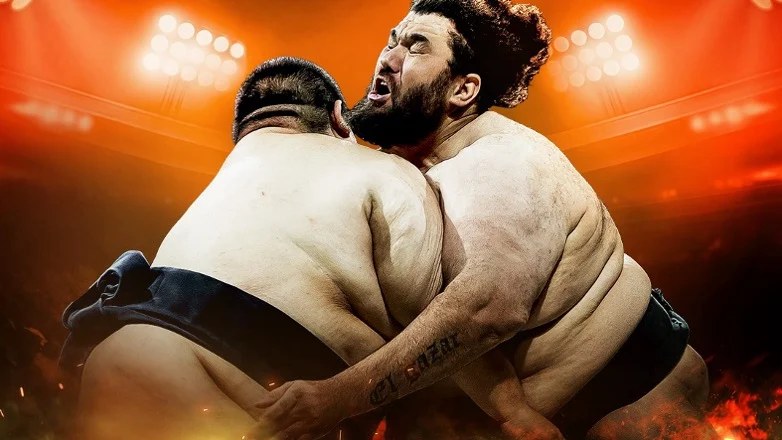
Heavyweight silver. On the way there he meets 512 pound Simeon at 488 pounds himself, the heaviest meeting in more than two thousand matches of US Sumo Open history. He throws him down.
Riyadh, and the officials' table
Officiates as an International Sumo Federation referee at the World Combat Games in Riyadh, and begins organising in the region.
Abu Dhabi
The only Arab wrestler on the card at the first international professional sumo competition held in the UAE. Nine wrestlers, thirty six bouts, sold out at Space42 Arena, and the start of a development project for the sport in the Gulf.
He has never accepted a ceiling on what he is allowed to be.
Athlete. Referee. Performer. Cook. Provider.
Next: Shows & screenSumo Guy
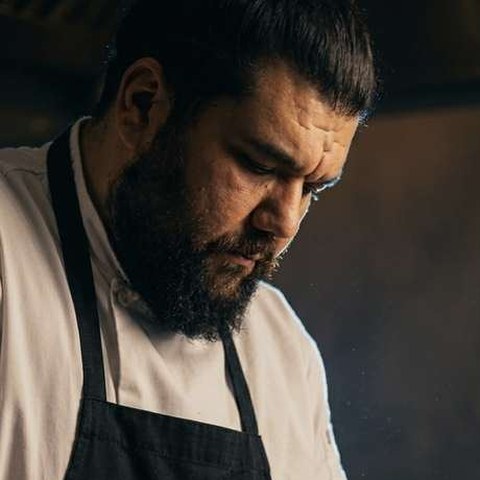
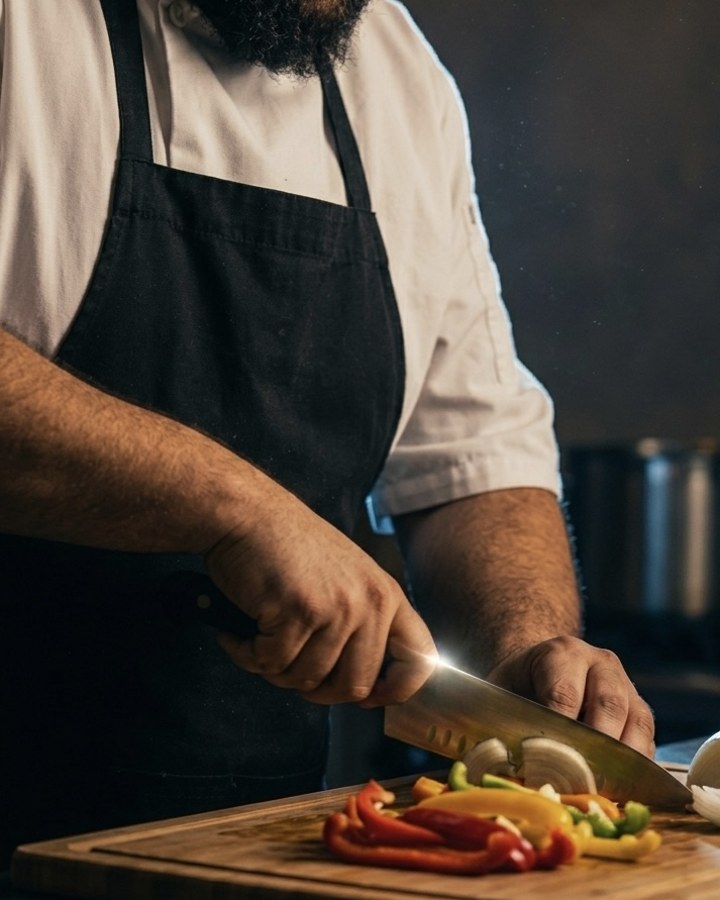
He started cooking at seven or eight years old, before sumo entered the picture, in a house where the protein came off the roof. It was never a career plan. It was the thing he loved, and he kept doing it through every year of training.
The obsession turned technical. Competing at the top of the heavyweight division on a diet he designed and paid for himself, he learned nutrition the way he learned groundwork, by study. He now works as a sports nutritionist alongside the sport.
His first food video took half a million views in two hours. Two of his largest collaborations are food rather than sport, Nick DiGiovanni's whole cow cook and unlimited sushi challenge, sixty eight million views between them, plus a campaign for OXO knives and salt.
Everything he puts out is his own. His recipes are developed in his kitchen rather than adapted from anyone else, and the spice blends behind them are built by him and used across the range, which is what gives the food a signature rather than a style.
Handmade from premium cuts and his own spice blend, chasing what he calls the true taste of traditional Eastern sausage. It is the dish he puts his name behind.
Sumo Guy
Founder and chief executive of @sumoguy.usa, authentic Egyptian street food, Long Beach and Los Angeles, California.
 Follow on Instagram
Watch on TikTok
Follow on Instagram
Watch on TikTok
+1.4 million
followers
The content is built for the Arab world first. Egyptian food, heritage and sumo explained in Arabic sit at the centre of the output rather than at the edge of it, with English versions alongside, which makes the channel a working bridge for campaigns running across the GCC, the wider MENA region and the Arab diaspora.
He built the Arabic
vocabulary for sumo
Sumo had no Arabic audience because it had no Arabic explanation. The terms, the ranks, the rituals and the rules existed only in Japanese and English, so the sport reached the region as a punchline rather than a discipline.
Ramy built the missing layer himself. Under the tag #سومو_بالعربي and on the dedicated channel @sumobyarabic, he has been teaching sumo in Arabic for years, taking questions from viewers who have never seen a bout and translating the ranks, the rituals and the rules into language the region can follow.
"I started doing sumo in Arabic on social media, to explain sumo to Arab people, because they have this idea about sumo, that it is just fat guys. Sumo means to be more respectful."
It is the reason he is the name the Arab world knows in this sport, and the reason a federation or a brand entering sumo in the region starts with an audience that is already educated rather than one that has to be built from zero.
 Watch on YouTube

Let's make
something big
Brand campaigns, live shows, film and television, appearances.